
When the Trailer Takes Control
It only takes a second. A slippery corner, a sudden brake, or an overloaded trailer can send a semi folding in on itself like a pocketknife. The result? A blocked lane, a rattled driver, and often a call to our Drums heavy recovery team. Jackknifing is dangerous and one of the quickest ways to cause road shutdowns, damage cargo, and put lives at risk.

The Real Cost of a Jackknife Wreck
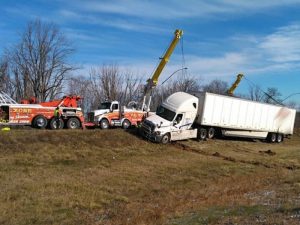
When a truck jackknifes, everything else stops. And every jackknife recovery call is different, but one thing stays the same: how fast the situation can go bad.
The most common scenes look like this:
- A loaded trailer swings sideways across both lanes.
- The tractor is angled and stuck, pinned by its own load.
- Cargo has shifted or spilled.
- There’s damage to the cab, the trailer, or worse—other vehicles.
And even if no one is hurt, jackknifing can still cost thousands in lost time, freight delays, and mechanical damage. By the time we arrive for Drums heavy recovery, the goal is to get the rig upright and rolling again without causing more damage.
Why It Happens, Even to Good Drivers
We’ve worked with experienced truckers who never saw it coming. Jackknifing doesn’t care if you’ve logged a million miles. It happens fast, and it usually boils down to one of three things: traction loss, speed, or poor weight distribution.
Here’s what usually triggers it:
- Hard Braking on Slippery Roads: Wet, icy, or even oily roads reduce tire grip. A sudden brake can send the trailer swinging.
- Descending Hills Too Quickly: Without proper speed control, the trailer can gain momentum and push the cab sideways.
- Empty or Light Trailers: When there’s less weight to keep the trailer grounded, it becomes more prone to swinging out.
- Bad Weather + Bad Timing: We’ve seen wrecks happen just minutes into a storm. It doesn’t take long.
How to Lower the Risk of Jackknifing
Jackknife crashes often happen fast, but they rarely happen without warning. Most of the time, they follow predictable patterns. Certain habits behind the wheel increase the risk, while others can reduce it. The best preventive steps are practical and simple. They do not require major changes, just consistent attention to driving conditions and trailer behavior.
- Slow Down on Curves and Ramps
Taking ramps too fast increases the chance of a trailer swinging out. This is especially true when the trailer is empty or lightly loaded. - Use Engine Braking Properly
Heavy use of foot brakes can lock the wheels and cause a skid. Engine braking helps reduce speed more evenly, especially on long descents. - Check Your Load Balance
Uneven or unsecured loads shift weight during turns or stops. Proper weight distribution keeps the trailer stable and reduces the chance of a swing. - Leave Room to Stop
Following too closely limits options during sudden traffic changes. A longer stopping distance allows time to brake gradually without triggering a skid. - Avoid Sudden Maneuvers
Sharp steering changes or quick lane shifts can upset trailer balance. Smooth, deliberate movements help maintain control.

Falzone Towing Service Knows Drums Heavy Recovery
At Falzone Towing Service, Drums heavy recovery is part of our job, and it’s where we bring our experience to the front lines. If you’re a driver trying to avoid the next jackknife or a dispatcher dealing with one right now, know this: our Drums heavy recovery experts have seen it, we’ve handled it, and we’re always ready for the next call.
When jackknifing happens, we roll out with everything we need to get that rig back upright. But make no mistake, Drums heavy recovery isn’t a quick fix. It takes planning, equipment, and a skilled Drums heavy recovery crew who knows how to work fast without cutting corners.