Fleet Downtime Fixes
Medium duty work lives in that sweet spot where vehicles still fit in everyday traffic, but they carry real weight and real risk if we rush a decision. In Drums box truck towing, we pay attention to wheelbase, cargo height, and how the load shifts when the truck sits at an angle on a shoulder. Delivery vans and box trucks bring their own quirks. They often run tight schedules, rack up miles fast, and show up in places built for cars, not tall rigs with wide turns. We treat every job like a puzzle we solve with calm steps, not guesswork.

Weight, Height, and the “Center of Drama”
A medium duty vehicle can feel fine until it leans a few degrees, then everything changes. We look at how high the box sits, how the suspension squats, and where the cargo likely settled. If the load moved, we plan around that before we even touch the truck.
How We Prep a Van or Box Truck for the Hook
Before we move anything, we size up the scene and set expectations. We check clearance, traffic flow, and any tight angles that could scrape a box corner or yank a bumper. If the truck sits in a dock lane or a cramped lot, we think about how to pull it out without turning the place into a three point turn competition.
Then we get practical about connection points and rollability. A delivery van with a damaged wheel, a box truck with a dead battery, or a drivetrain issue all change the approach. In the second half of the job, the goal stays the same: control every inch of movement, especially when weight shifts.
Our Quick Checklist Before We Move
Here’s what we run through on most medium duty calls:
- Confirm truck size and approximate loaded weight
- Check tire condition and wheel damage
- Note low hanging parts like steps, liftgates, or loose panels
- Identify the safest pull direction for the spot we’re in
- Plan the drop location so the driver can get back to work
Common Mistakes That Cost Time
People sometimes try to “help” by turning wheels hard, riding the brake, or moving cargo around mid hookup. That can complicate the pull and create new damage. We prefer clear communication and steady hands, especially on Drums box truck towing calls where space and angles get tight fast.

Call Falzone Towing Service for Calm, Organized Drums Box Truck Towing
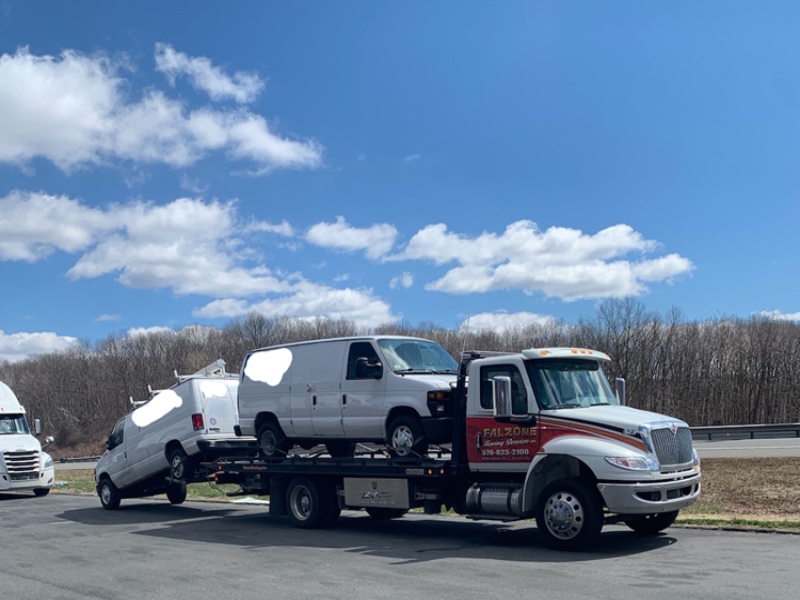
Medium duty towing in our area often comes down to timing and access. A delivery van might block a narrow lane, and a box truck might sit half in a driveway with no room to swing wide. We’ve handled plenty of Drums box truck towing requests where the biggest challenge wasn’t distance, it was getting the truck out cleanly without adding dents to a box corner or shredding a tire on a curb.
At Falzone Towing Service, we focus on towing delivery vans and box trucks with a steady process and clear communication, from the first call to the final drop. We handle Drums box truck towing for breakdowns, non starts, tire blowouts, light recovery situations, and relocations that need a careful touch around tight lots and loading areas. If you run a fleet, we can support repeat Drums box truck towing needs with consistent pickup details and predictable coordination. When a driver calls us for Drums box truck towing, we treat their schedule like it matters, because it does, and we keep the steps simple so the job stays on track.
FAQ
What counts as medium duty towing?
Medium duty towing usually covers work vehicles that sit between passenger cars and heavy trucks. Think larger cargo vans, step vans, box trucks, and some small flatbeds. Weight, wheelbase, and overall height matter more than the label on the door.
What information should I have ready when I call for a tow?
Have the vehicle make and model, where it sits, and what went wrong. Add details like cargo type, approximate load level, wheel damage, and any height restrictions at the location. That info helps us choose the right tow setup and avoid delays.
Can a tow truck move a loaded box truck?
Often yes, but it depends on the total weight and how the load sits. A loaded truck can shift more during a pull, so we account for stability, braking, and safe turning clearance. If the load looks uneven or unsafe, we may recommend adjusting it before transport.
What should the driver do before the tow truck arrives?
Move to a safe spot if you can, turn on hazard lights, and stay visible. Take photos of the vehicle position and any damage, then keep keys accessible. Avoid trying to force the vehicle to roll if a wheel, axle, or steering component looks compromised.
Will towing damage my liftgate, bumper, or underbody?
It should not, when the tow plan matches the vehicle and the situation. The biggest risks come from poor angles, low clearance, or pulling before checking loose parts. A careful operator will choose connection points and a route that protects common impact areas like steps, liftgates, and rear corners.
How long does medium duty towing take?
Most time goes into setup, not the actual pull. Tight access, traffic, uneven ground, and wheel or drivetrain issues can add minutes fast. If you share accurate details on the first call, the tow usually moves quicker because the right equipment arrives the first time.