Transmission Myths Busted
We’ve heard it too many times: “Towing ruins your transmission.” It’s one of those myths that just won’t die, no matter how much real-world evidence or common sense we throw at it. And we get it. Because transmissions are expensive, mysterious, and essential. But here’s the thing: when done properly, towing does not hurt your transmission. In fact, most modern vehicles are more than capable of handling a tow, especially when the right equipment and techniques are used. What does cause transmission trouble? Poor maintenance, overheating, and driver neglect. Nanticoke towing is often just a scapegoat.

Why the Myth Exists
Like most myths, this one has roots in reality. But it’s not the whole story. Years ago, towing practices were more primitive, vehicles weren’t as mechanically sophisticated, and information wasn’t as accessible. If you towed a front-wheel drive vehicle with its front wheels on the ground, for example, you could cause real damage. But that’s not towing’s fault. It’s a technique issue.
Another piece of the puzzle is overloading. Pulling more weight than a vehicle is rated for can absolutely strain the drivetrain. That’s not about towing in general, it’s about doing it wrong.
So What Actually Harms a Transmission?
- Neglecting regular fluid changes
- Overheating from heavy use without cooling
- Ignoring warning signs like slipping or hesitation
- Towing with the drive wheels on the ground in neutral (on automatics)
Notice what’s missing from that list? Towing itself.
Smart Towing Protects Your Vehicle
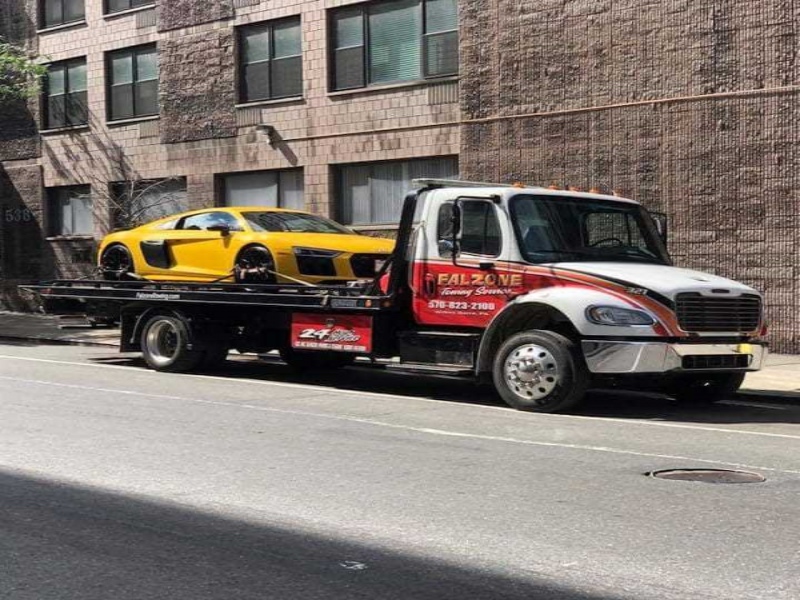
We’re not saying transmissions are invincible, far from it. But with the right gear and practices, they’re safe. Flatbed tow trucks keep all wheels off the ground. Dollies lift the drive wheels. And professional towing companies know how to choose the right option based on the make and drivetrain of your car.
On top of that, most vehicles today are built with towing in mind. Manufacturer guides even include specific instructions for how to tow or be towed. If towing ruined transmissions, do you think they’d bother?
Let’s bust some more towing myths while we’re at it:
- “Towing always causes wear and tear.”
All driving causes wear and tear. Towing, when done correctly, adds no more than daily driving. - “You can’t tow automatic cars.”
Totally false. You just have to lift or disconnect the drive wheels. - “Manuals are safer to tow than automatics.”
Not true across the board. It depends on how it’s done, not what you’re towing.
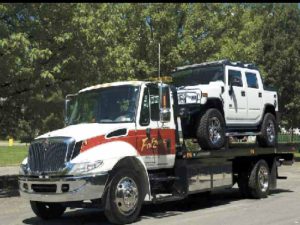
Nanticoke Towing That Gets It Right – Trust Falzone Towing
When folks in Luzerne County need Nanticoke towing, they call us because we know what we’re doing. At Falzone Towing, we’ve been around long enough to see every kind of roadside issue—and that includes helping customers who’ve been told their transmission’s doomed after a tow. It’s not. We handle every vehicle with care, using the method that keeps your car safe from curb to drop-off.
Our Nanticoke towing crew uses flatbeds and wheel-lift setups based on your vehicle’s drivetrain. And if your car needs to go to the shop? We tow it like it’s ours. That’s why people in the Nanticoke area trust us when they need reliable, damage-free towing.
Call our Nanticoke towing team for:
- Flatbed towing
- Light-duty and medium-duty recovery
- Winching and roadside assistance
- Nanticoke towing for personal and commercial vehicles
Let’s finally put this myth to rest. Towing doesn’t destroy your transmission. But bad information might. At Falzone Towing, we keep your vehicle safe and your drive worry-free. For Nanticoke towing that knows the difference between myth and truth, give us a shout.
FAQ
Can a tow truck damage an automatic transmission?
A tow truck can damage an automatic transmission if the vehicle is moved incorrectly. Problems usually happen when the drive wheels stay on the ground and continue turning while the engine is off. A flatbed or wheel lift prevents this issue.
Why do some vehicles need a flatbed instead of a wheel lift?
Some vehicles need a flatbed because of their drivetrain, low ground clearance, all wheel drive system, or manufacturer requirements. Flatbeds keep every wheel off the road, which helps protect the transmission, suspension, and underbody.
Is it safe to tow an all wheel drive vehicle?
Yes, but only if the correct method is used. Most all wheel drive vehicles should be transported on a flatbed. Pulling them with two wheels on the ground can damage the transmission or transfer case.
How can I tell if my transmission was already failing before the tow?
Warning signs often appear before the tow ever happens. Common symptoms include delayed shifting, slipping between gears, grinding noises, leaking transmission fluid, or a burning smell. If these problems existed beforehand, the tow likely did not cause them.
Can towing a heavy trailer wear out my transmission?
Towing a trailer that exceeds your vehicle’s rated capacity can put extra strain on the transmission. Heat is usually the biggest problem. Staying within the weight limit and using the proper towing package can help avoid damage.
Where can I find the correct towing instructions for my vehicle?
The best source is your owner’s manual. Most manufacturers include a section that explains whether the vehicle can be towed, which wheels should stay off the ground, and whether a flatbed is required.