
The Road Doesn’t Sleep, and Neither Do We
Darkness changes everything. It changes how the road looks, how traffic moves, and how our tow truck operators work. In the middle of the night, when most people are home asleep, we’re out answering calls for Drums emergency towing. It’s a different kind of shift, one that demands more from us than daylight ever does.
Why Night Calls Feel Different
There’s no such thing as a routine tow after midnight. What might be a simple roadside call in daylight can quickly turn complicated when the sun goes down.
That’s when we encounter stalled cars on winding backroads with no streetlights, help stranded drivers on foggy highways where headlights barely cut through the haze. Or just finding the vehicle is a challenge. Every call during the dark feels more urgent, more unpredictable. That’s the reality of Drums emergency towing after hours.
Limited Visibility, Higher Risk
When we roll up to a scene at 2 a.m., our first priority is setting the stage: lighting it up like daylight so we can work without second-guessing. Streetlights don’t reach every shoulder or side road. That’s why we rely on high-powered scene lighting and reflective gear to create a safe, visible perimeter.
At night, even small details matter more. A low-lying bumper, a stray piece of glass, a slick patch of oil… we can’t afford to miss anything. We triple-check every chain, strap, and hook-up point. Because once you’re operating in the dark, the margin for error shrinks fast.
Fatigue Hits Everyone on the Road
It’s not just us who feel the strain of night work, other drivers do too. Late-night traffic might be lighter, but it’s also riskier. We see more impaired drivers, more speeding, and more vehicles drifting between lanes. Responding to a Drums emergency towing call in the early morning hours means assuming the unexpected is just around the bend. And even if we’ve already been out all night, every new call gets our full attention. Fatigue is real, but it never gets to compromise our work.
The Scene Becomes the Strategy
Every tow is a puzzle. At night, the pieces are harder to see. That’s why we plan our setups differently for Drums emergency towing calls after dark. Positioning our rig to shield the work zone becomes even more critical. We angle our trucks to create a barrier between us and passing traffic. We deploy cones, flares, and flashers further down the road than we would during the day.
We also keep in constant contact, between our team members, dispatch, and sometimes even local law enforcement. Communication keeps us moving efficiently and safely through the process, especially when we’re operating on a curve or a blind hill.

Not All Tows Can Wait for Morning
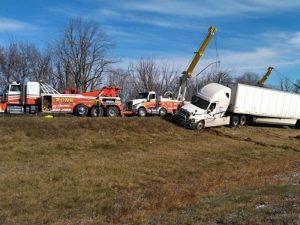
Some drivers ask if they should just wait until daylight. But breakdowns don’t always happen in convenient places. Or at convenient times. A dead battery in a shopping center lot might be fine to leave overnight. A semi stuck on Route 309? That’s a problem that needs attention now.
We handle Drums emergency towing calls around the clock because we know some vehicles simply can’t stay where they are. Waiting for morning can mean more damage, more risk, and more hassle for the driver. Our trucks are ready, lights charged, gear packed, and crews on standby. So no one has to wait for daylight.
Here’s What We Always Bring for Night Tows:
- Portable LED floodlights
- Reflective clothing and signage
- High-visibility cones and flares
- Radios and backup comms
- Spare batteries and flashlights
Every item on that list is standard for our night shifts. Because for us, being prepared is non-negotiable.
Night-Time Towing Safety FAQ
1. Is nighttime towing more dangerous than daytime towing?
Yes. Reduced visibility, higher rates of impaired or fatigued drivers, and limited lighting make nighttime towing more hazardous for both operators and stranded motorists. Professional night crews use extra lighting, reflective gear, and traffic-control setups to manage the risks.
2. Why is visibility so critical during a night towing call?
Most roadside shoulders and backroads around Drums aren’t well lit. Good visibility:
-
Keeps the tow team safe while hooking up the vehicle
-
Alerts oncoming drivers to slow down or move over
-
Helps the operator see hazards like broken glass, low bumpers, or oil on the pavement
3. How do towing operators keep a night scene safe?
Experienced crews bring:
-
Portable LED floodlights to light up the work zone
-
Reflective gear and signage so they’re seen from a distance
-
High-visibility cones, flares, and flashers placed farther back than during the day
-
Trucks positioned as a barrier between the work area and traffic
4. What makes night driving riskier for stranded motorists and towing teams?
Nighttime brings:
-
More fatigued or drowsy drivers
-
Increased chances of impaired or distracted driving
-
Reduced reaction time because headlights reach only so far
These factors mean both the stranded driver and the responding tow team face higher risk until the vehicle is secured.
5. Should I wait until morning to get towed if my car breaks down at night?
Not always. If your vehicle is in a shopping-center parking lot, waiting may be safe. But if it’s stuck on Route 309, I-80, or a blind curve, the safest move is to call for emergency towing immediately to avoid additional danger or damage.
6. How do operators stay alert on overnight shifts?
Reputable companies rotate crews, schedule rest periods, and maintain constant radio or phone contact with dispatch and, when needed, local law enforcement. Communication keeps the team sharp and coordinated.
7. What should I do if my car breaks down at night before the tow truck arrives?
-
Pull as far off the roadway as safely possible
-
Keep hazard lights on
-
Stay inside the vehicle with seat belt fastened if near traffic
-
Provide dispatch with precise location details (mile marker, nearest exit, or landmark)
-
Wait for instructions from the tow operator
8. How does Falzone Towing prepare for Drums emergency towing after dark?
We equip every night-shift truck with:
-
Charged scene lights and spare batteries
-
Reflective clothing, cones, and signage
-
Two-way radios and backup comms
-
Crews trained to secure the area before touching the vehicle
Our focus is to keep everyone — motorists, responders, and passing drivers — safe.
9. What sets experienced night-shift towing crews apart?
It’s a mix of:
-
Training to adapt setups for curves, hills, and limited space
-
Discipline to triple-check every strap, hook, and safety step in the dark
-
Teamwork to manage fatigue and communicate clearly under pressure
-
Commitment to show up no matter the hour or the weather

Falzone Towing: Ready for Drums Emergency Towing When It’s Darkest
Night towing isn’t for everyone. It takes experience, focus, and a whole lot of grit. We’ve spent plenty of nights out on the roads around Drums handling emergency towing jobs others didn’t want to touch. From single-car breakdowns to highway recoveries, we don’t shy away from the tough shifts. We know what it means to show up when it counts, especially when it’s dark, cold, and quiet. Drums emergency towing isn’t just about showing up, it’s about doing the job right, no matter the hour. We’ve built our team around that mindset.