The Moment After Impact
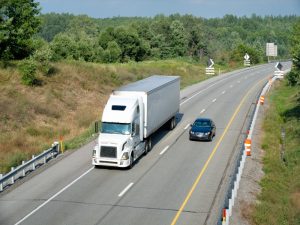
Imagine the following accident scenario: a driver has just jackknifed on Route 11 near Drums. He gives us a call. His first words were about the load, not himself. That’s common. Drivers worry about cargo, about blocking traffic, about their company finding out. We’ve been in the business long enough to understand. But those first ten minutes after a semi accident determine a lot. What you do right after impact affects your safety, your insurance claim, and how fast we can get you cleared. Drums semi towing calls teach us that most drivers skip steps they shouldn’t.
The cab might feel stable even when it’s not. We’ve seen trucks that looked fine from the driver’s seat but were leaking fuel or had frame damage underneath. Your first move is checking yourself for injuries, then getting out only if it’s safe. If you’re on a highway shoulder or in a lane, staying inside might be worse than getting clear. But if you’re off the road and the truck isn’t smoking or leaking, sometimes staying put until help arrives is smarter.
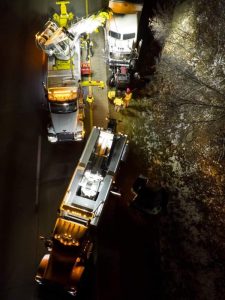
Securing the Scene Before We Arrive
Most crashes we handle in the Drums area happen on Route 80 or Route 11. Traffic moves fast there. If your semi is blocking a lane or sitting on a narrow shoulder, other drivers might not see you until it’s too late. Turn on your four-ways immediately. If you can safely get out, set up triangles or flares at least 100 feet back. We’ve responded to secondary accidents where a car hit a truck that was already disabled. That second collision can be worse than the first.
Call 911 before you call anyone else. Then call us. Drums semi towing means we’re usually 15 to 25 minutes out depending on where you are and what equipment we need to bring. While you’re waiting, take photos if you can do it safely. Get shots of all four sides of your truck, the road, any other vehicles involved, and your load if it shifted. Insurance adjusters want to see what the scene looked like before we move anything. Exchange information and wait.
What Not to Do While You Wait
We’ve seen drivers try to move their own truck after a crash. Bad idea. If the frame is bent or the suspension is damaged, driving even 20 feet can make it worse. One driver last year tried to limp his truck off Route 80 near the Conyngham exit after a front-end collision. He made it 200 yards before the steering gave out completely. What started as a towable truck turned into a total teardown job. If the truck won’t start or something feels wrong when you try, leave it alone.
Don’t leave the scene unless you’re injured and need an ambulance. Even if the other driver says it’s fine or there’s no visible damage, stay until police arrive. Pennsylvania law requires it for any accident with injuries or significant damage. If you leave early, it complicates everything. Also, don’t sign anything from the other driver or their insurance company on the spot. You’re shaken up. You don’t know the full extent of the damage yet. Wait until you’ve talked to your own company and your insurance.
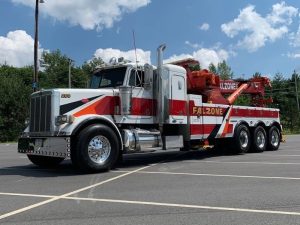
How Falzone Towing Handles Drums Semi Towing Calls
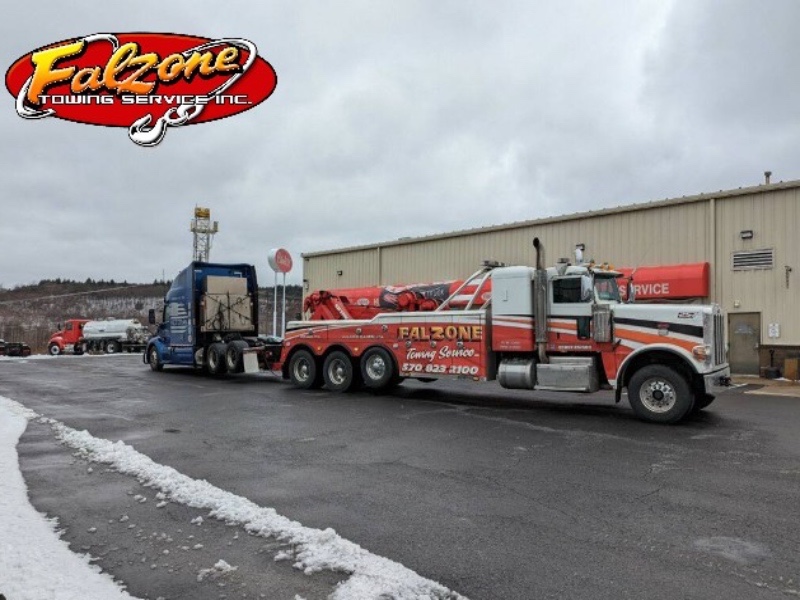
When you call our Drums semi towing team after a semi accident, we ask specific questions. Where exactly are you? Is the truck leaking anything? Is the load secure or did it shift? Are lanes blocked? We’ve been doing Drums semi towing and recovery for over 70 years, so we know which roads get congested fast and which scenes need heavy equipment versus a standard wrecker. If your load spilled or your truck rolled, we bring our rotator and sometimes a second truck. If it’s a simple rear-end collision and the truck still rolls, we might just need a standard tow setup.
Our Drums semi towing team works directly with state police and local departments around here. They know us. That speeds things up when it comes to clearing lanes and managing traffic. Once we’re on scene, we handle documentation for insurance, we coordinate with your fleet manager if needed, and we get your truck to our yard or a repair facility depending on the damage. Most drivers we pick up after a crash are rattled. Our Drums semi towing experts get it. The ten minutes right after the crash might feel like chaos, but if you follow the steps, it makes the next few hours a lot easier for everyone involved.
FAQ
Should I move my truck off the road after an accident?
Only if it’s drivable, safe, and you’re blocking traffic in a dangerous spot. If the truck won’t start, the steering feels off, or you see fluid leaking, leave it where it is. Moving a damaged truck can make the damage worse and create liability issues.
What if the other driver wants to settle without calling police?
Don’t agree to it. Pennsylvania law requires a police report for any accident involving injury or significant vehicle damage. Even if it seems minor, hidden damage often shows up later. Always call 911 and wait for an officer.
How long does it take for a tow truck to arrive after a crash?
It depends on your location and what equipment is needed. For most accidents in the Drums area, expect 15 to 30 minutes. If we need to bring a rotator or coordinate with police to close lanes, it might take longer.
What should I tell my dispatcher right after the accident?
Give them your exact location, whether you’re injured, if the truck is drivable, and if your load shifted or spilled. They’ll need that information to decide next steps and contact insurance. Stay calm and stick to the facts.
Can I leave the scene if the truck is drivable and no one is hurt?
No. Wait for police to arrive and file a report. Leaving early can result in legal trouble and complicates your insurance claim. Even if the other driver says it’s fine, stay until authorities clear you to go.
What happens to my truck after it gets towed from the accident scene?
We take it to our secure yard or directly to a repair facility if your company requests it. We document the condition, take photos, and work with your insurance adjuster. You’ll get a full report of where the truck is and what the next steps are.