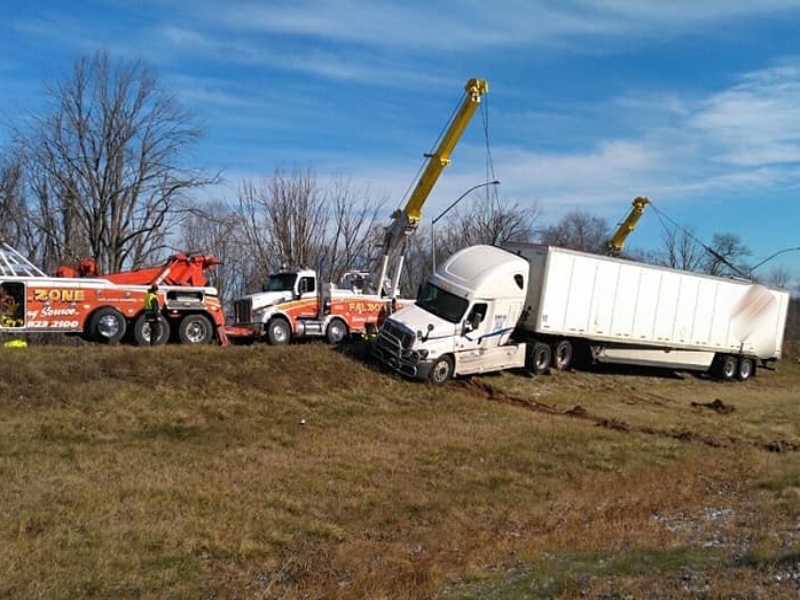
On the Interstate, Scene Control Comes Before Any Rigging
A highway breakdown and a parking garage call look nothing alike when the truck arrives. The road type changes everything about the response. Our Edwardsville towing team handles both, and the difference starts at dispatch. Highway calls introduce live lanes, active traffic, and immediate exposure that city calls do not carry.
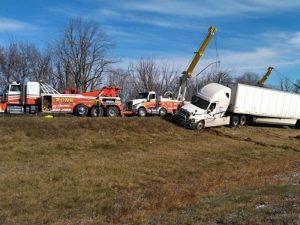
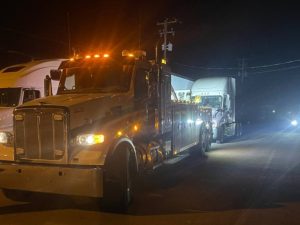
Scene control is step one on any highway call. Warning lights deploy before anyone steps out of the truck. The truck positions as a rolling barrier between the work zone and moving traffic. Equipment scales up on corridor calls too: extended boom rigs, heavy wreckers, and flatbeds for damaged commercial vehicles. Dispatchers confirm vehicle type and road conditions before assigning a unit to any highway job.
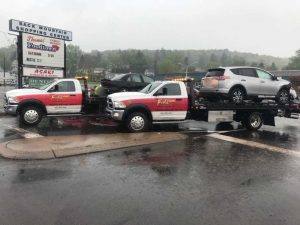
In Town, the Challenge Is Spatial, Not Exposure
City and local calls trade highway exposure for geometry. Overhead utilities, parked vehicles, narrow driveways, and tight intersections define the approach. A compact wheel-lift works well on a residential street. It is not the right setup for an interstate recovery, and that distinction drives every dispatch decision. Dispatchers ask the right questions before the truck rolls.
Close-range traffic management is part of every urban job. Vehicles approach from short distances with little time to reposition. Experience on tight and varied call environments is what makes a crew fast and accurate in those conditions. Building that experience takes years of working diverse road types at every hour.
What a Vehicle in a Commercial Lot or Narrow Block Asks of the Crew
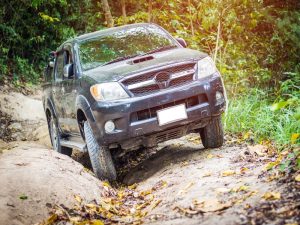
A vehicle stuck in a tight commercial lot or multi-level garage is a geometry problem first. Our Edwardsville towing operators assess clearance, approach angle, and exit path before anything is connected. The surroundings determine the setup. That assessment shapes every step from positioning to hook-up. Parked cars, curbs, support columns, and low ceilings can leave only inches of working room. We may need a compact unit, wheel dollies, or a slower multi-step move to get the vehicle out cleanly. The shortest tow can still require the most careful setup.
City vs. Highway at a Glance
Here is what each road type typically requires:
- Highway calls require scene lighting and a protective buffer before any rigging starts
- Active corridor incidents often involve commercial vehicles that need heavy-duty configurations
- Interstate shoulder work demands high-visibility positioning as the first step
- City and local calls require compact, maneuverable equipment for tight access points
- Urban scenes call for clearance and approach assessment before the truck parks
- Every Edwardsville towing dispatch is confirmed against the road type before departure
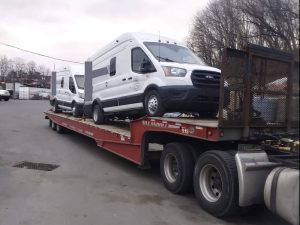
Falzone Towing Service: Edwardsville Towing With Eight Decades Behind It
Falzone Towing Service began as a small automobile service station in 1945. Over eight decades, it has grown into one of the largest complete towing and service operations in the northeastern US. The fleet handles everything from a flat tire on a local street to oversized equipment transport across state lines. Edwardsville towing calls are answered around the clock, every day of the year, by trained staff who know the operation.
Every call goes through in-house dispatch. No after-hours answering centers. No handoffs to crews unfamiliar with the fleet. Routine roadside assists and complex corridor recoveries both go through the same experienced Edwardsville towing team. Eight decades of Edwardsville towing service is what that consistency looks like.
FAQ
What makes a highway towing call more complex than a city call?
Highway calls combine vehicle recovery with active traffic management. The crew is working in a live lane environment where exposure to passing vehicles is constant. Scene setup, including lighting and truck positioning, has to happen before any recovery work starts. City calls present geometry and access challenges instead, but the crew is not working alongside traffic moving at highway speeds throughout the job.
How does in-house dispatch differ from a third-party answering service?
In-house dispatch means the person answering the call is part of the same company and knows the fleet, the operators, and the coverage area. Third-party centers handle calls for multiple companies and may not know which unit is closest, what it carries, or if the unit is already on a call. In-house teams have that information directly and can make accurate commitments on response time and equipment.
What is extended boom equipment and when is it used on a highway call?
Extended boom equipment on a heavy wrecker allows the operator to reach vehicles that have gone off the road or are positioned at an angle that a standard lift cannot reach directly. It is used for vehicles that have left the shoulder, rolled down embankments, or jackknifed in positions that block a straight-on approach. The extended reach allows rigging and extraction without positioning the recovery truck in an unsafe location.
How do towing companies handle simultaneous calls during peak hours?
Operations with in-house dispatch track unit locations and availability in real time. When multiple calls come in, dispatchers assign based on the nearest appropriate unit for each job type. A heavy wrecker does not get sent to a light-duty call just because it is close. Well-managed fleets maintain that distinction under pressure, which is why fleet size and dispatch experience both matter.
What does a rotator truck do that a standard heavy wrecker cannot?
A rotator has a boom that pivots 360 degrees, allowing the operator to position the lift from almost any angle around the vehicle. Standard heavy wreckers have fixed or limited-swing booms that require the truck to be positioned at a specific angle. Rotators are used for complex recoveries where the approach angle changes, where the vehicle has rolled, or where surrounding obstacles prevent standard wrecker alignment.
What should drivers know about stopping on a highway shoulder?
Pull as far right as possible and stay out of travel lanes. Turn on hazard lights immediately. If it is safe to exit the vehicle, move well away from traffic toward the guard rail or barrier. Stay away from the roadway while waiting for help. Call with your exact location, direction of travel, and a description of the situation so dispatch can send the right equipment and brief the operator before arrival.